
Obi–Kwankwaso Combo Is Nigeria’s Best Hope’ — Kalu Okoronkwo
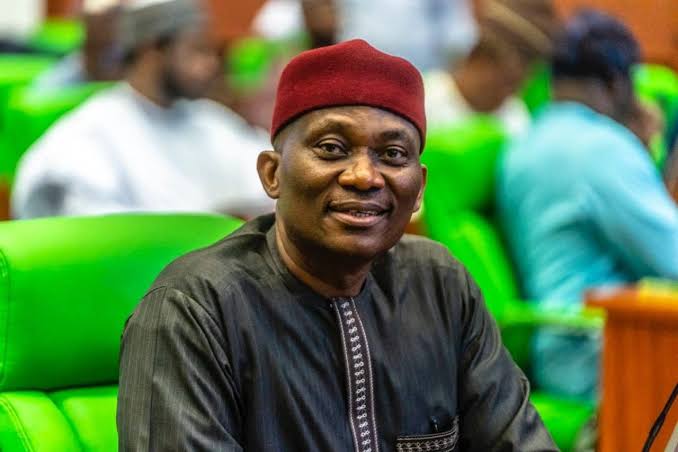
Political analyst and public affairs commentator Kalu Okoronkwo has described a potential political alliance between Peter Obi and Rabiu Musa Kwankwaso as a rare convergence of leadership qualities Nigeria urgently needs.
In a strongly worded statement, Okoronkwo said the Obi–Kwankwaso combination goes beyond mere political calculation, arguing that it represents a fusion of integrity, accountability, competence and grassroots appeal that has been largely absent in Nigeria’s leadership space.
According to him, Peter Obi symbolizes prudence and discipline in public finance management at a time when Nigeria has suffered from what he described as “gluttonous consumption of commonwealth by political elites.” He noted that Obi’s public service record reflects frugality, data-driven planning and a firm belief that leadership should be rooted in stewardship rather than personal enrichment.
“Peter Obi represents the order of frugality in managing public finance in a country where leaders are addicted to wasteful consumption,” Okoronkwo said. “His public life has been defined by fiscal discipline, evidence-based planning and the conviction that leadership is service, not lordship.”
On the other hand, Okoronkwo described Rabiu Musa Kwankwaso as a politician with deep grassroots connection and mass appeal, whose strength lies in mobilization, institutional reforms and human capital development. He highlighted Kwankwaso’s long-standing focus on education, social inclusion and subnational development, particularly during his tenure as governor of Kano State.
“Kwankwaso embodies populist politics with purpose,” he said. “His record shows commitment to educational reform, empowerment of the masses and building institutions that outlive individual ambition.”
The analyst argued that while Obi is largely austere and technocratic in approach, Kwankwaso brings an expansive and people-oriented style to governance, making their potential partnership a “political symmetry” capable of balancing efficiency with empathy.
“Where Obi is disciplined and methodical, Kwankwaso is energetic and mobilizing. Together, they reflect prudence matched with power, efficiency paired with practicality, and reform anchored in compassion,” Okoronkwo added.
He concluded that Nigeria’s complex challenges—ranging from economic instability and insecurity to weak institutions—require leadership that combines credibility with connection to the people, noting that the Obi–Kwankwaso pairing could offer such balance if actualized.